
Prerequisites
Read these first if DEX, ART, Zygote, or AOT/JIT are new.
- Android Runtime (ART) and Dalvik — how Android runs app code (DEX → ART)
- Dalvik Executable format — what a `.dex` contains
- Zygote — how app processes are forked
- Configure ART — AOT, JIT, and profile-guided compilation at a glance
Why Dalvik still shows up in stack traces
Search “Dalvik” today and you mostly get archaeology — fair enough. ART replaced Dalvik as the default runtime in Android 5.0 (Lollipop) and every current device runs ART. But the bytecode format, the per-process VM model, and the Zygote fork path Dalvik established are still how apps start and execute. When cold start regresses or you see DEX/OAT/VDEX in a build artifact, you are looking at that lineage.
The useful question is not “which VM is installed?” but which runtime contract did I violate — process isolation, bytecode shape, or compilation timing.
One app, one process, one runtime instance
Android runs each app in its own Linux process with its own runtime instance. That is different from a desktop JVM hosting many threads in one big process. Crash isolation, memory limits, and permission boundaries all assume this model.
When the system boots:
- The kernel starts
init, which launches system daemons. - Zygote starts and preloads core framework classes and resources.
- When you launch an app, Zygote forks a child process; the child becomes your app’s runtime.
Copy-on-write means the child initially shares read-only pages with Zygote. Pages are duplicated only when written, so “load the entire framework” is amortized across every app launch instead of paid in full each time.
Figure 1. Zygote forks a pre-warmed process for each new app.
If every app feels slow to cold-start after an OS update, think Zygote/ART boot image before micro-optimizing your splash screen. If one app alone misbehaves, stay in that process.
DEX is not JVM bytecode
Java and Kotlin sources compile to .class files, then Android build tools (d8 / R8) produce DEX — Dalvik Executable — packaged as classes.dex inside the APK. ART still runs DEX; the name “Dalvik” stuck to the file format even after the interpreter moved on.
DEX is tuned for mobile: shared constant pools, fewer files, and instructions aimed at a register-based machine instead of the JVM’s stack-based model.
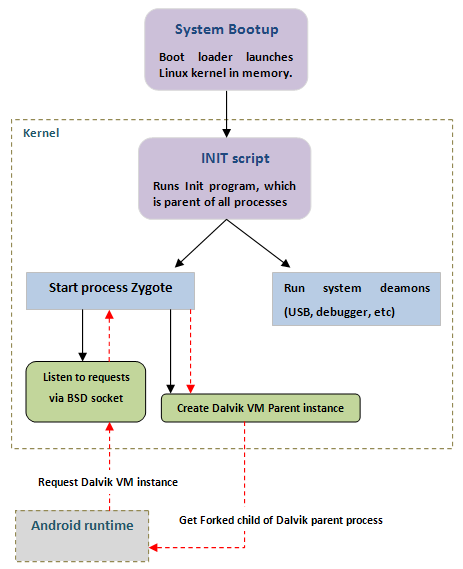
Figure 2. Register-based Dalvik/DEX vs stack-based JVM bytecode (see Mark Faction in References).
Conceptually:
// JVM-style (stack): push operands, operate, push result
iload_1
iload_2
iadd

// DEX-style (registers): operands live in named registers
add-int v0, v1, v2   // v0 = v1 + v2
Register machines can encode fewer memory touches for typical Android methods — useful when register pressure and instruction count both matter on a phone SoC. You rarely hand-write DEX, but you do feel it when R8 shrinking changes method counts or when a dex limit forces multidex.
Dalvik → ART: what actually changed
Dalvik (historical) interpreted DEX at runtime with just-in-time compilation added later. Startup was relatively cheap; steady-state performance could lag behind natively compiled code.
ART (current) compiles DEX to native code — largely at install or update time via dex2oat, with JIT for hot paths at runtime. Startup can cost more disk and install time; execution is faster and GC/accounting evolved with it.
What stayed the same:
- Per-app process + Zygote fork — still the launch path.
- DEX as the portable IR — still what ships in APKs (plus profiles and verified DEX in modern builds).
- JNI boundary — native code still enters through the same managed runtime rules.
What broke when Dalvik-only tricks met ART:
- Reflection and class-loading hacks that “worked on Dalvik” sometimes fail verification or AOT compilation.
- Assumptions about garbage-collection pauses changed — profile ART on real devices, not an old mental model.
Do not build new features assuming an interpreter-only Dalvik world. Do understand why install size grew (OAT/VDEX) and why adb shell cmd package compile shows up in performance playbooks. On a device you own, compare cold start before and after clearing profile data — if only first launch is slow, you are often paying compilation or profile collection, not bad layout code.
Failure modes that map to the runtime layer
| Symptom | Runtime-angle check |
|---|---|
| Slow cold start after OS upgrade | Zygote boot image, ART profiles, dex2oat state |
ClassNotFoundException only in release |
R8 shrinking vs reflection; verify release build |
VerifyError / dex2oat failure |
Invalid bytecode from post-processing tools |
| Native crash after JNI change | JNI pinning / thread attachment across ART GC |
| Multidex / 64K method limit | DEX merge strategy, feature modules |
ART is the engine; DEX is still the fuel format. Dalvik is the name of the path Android took to get here — worth knowing when docs, filenames, and older papers still say “DVM.”
References
- Platform architecture (ART section) — Android Developers
- Mark Faction, Stack-based vs register-based VM architecture and the Dalvik VM (markfaction.wordpress.com) — register vs stack intuition (figure credit for Figure 2)
- Stack-based vs register-based VMs (this site) — why DEX named registers instead of an operand stack